These questions ask you to connect a regulatory device with the exact command, movement, or approach it controls. Read the visible message first, then identify whether it governs stopping, yielding, speed, one movement, or entry direction.
Classify the command before choosing its effect
A STOP device and a YIELD device both manage right of way, but they do not create the same sequence. R1-1 belongs on an approach where every arrival must make a complete stop. R1-2 instead calls for speed to be reduced to fit the conditions, with a stop added when that is needed to keep from interfering with conflicting traffic. The distinction is unconditional stopping versus conditional stopping after the driver has assessed the conflict.
| Device cue | Question to ask |
|---|---|
| Red octagon marked STOP | Does this approach require every arrival to stop completely? |
| Downward red triangle marked YIELD | What speed fits the conditions, and would continuing interfere with conflicting traffic? |
| SPEED LIMIT rectangle | Is the displayed 5 mph increment an established limit rather than curve advice? |
| Arrow under a red circle and slash | Which single depicted movement is barred? |
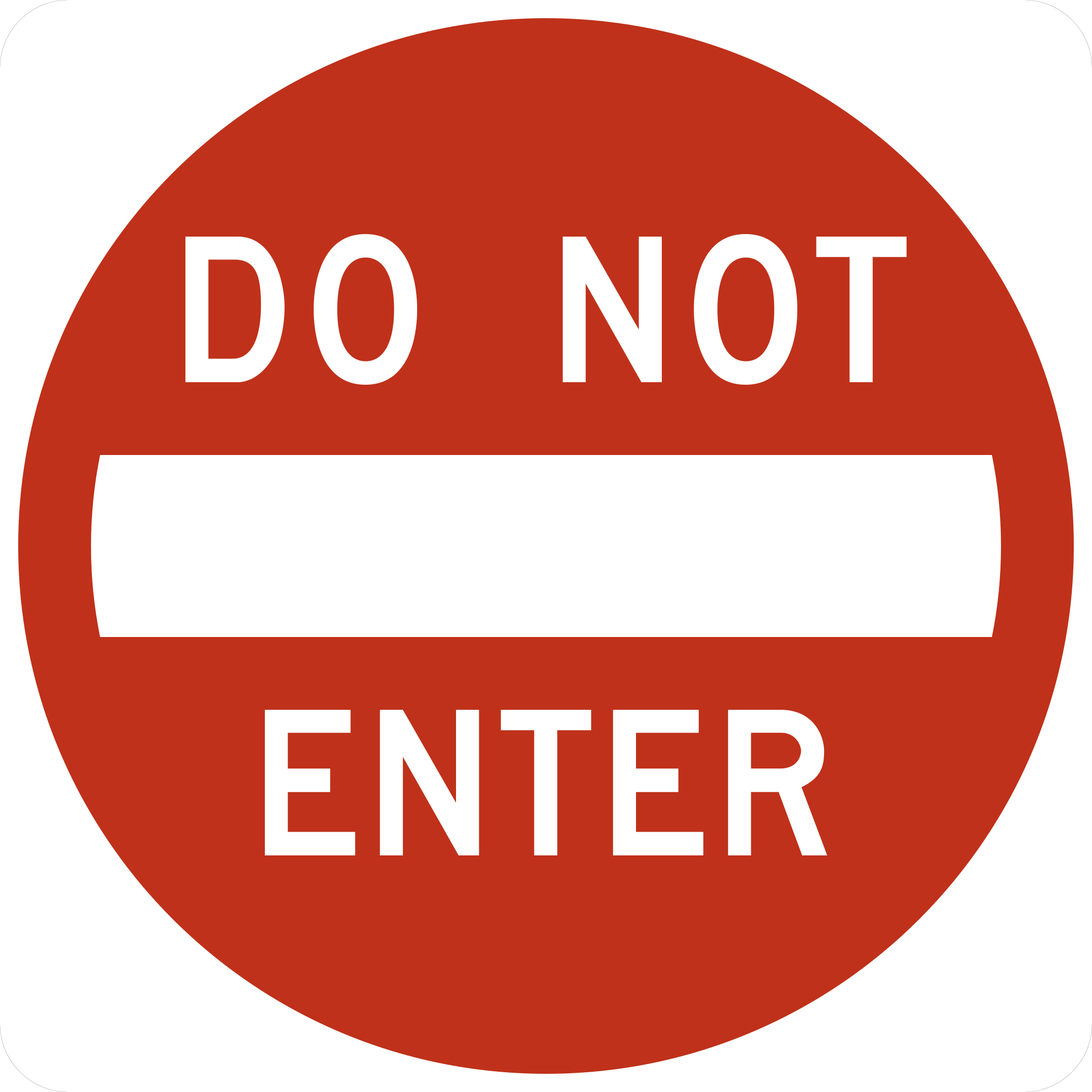
| DO NOT ENTER face | Which approaching traffic could otherwise enter against the intended direction? |
For an R2-1 speed device, separate a limit from guidance about a curve. The number is established through law, regulation, ordinance, or an authorized agency process and appears in a multiple of 5 mph. An advisory value used with horizontal-alignment warnings has a different purpose. Do not transfer the word advisory to a regulatory speed display merely because both devices can contain a number.
With movement restrictions, trace the black symbol before interpreting the red slash. A crossed right-turn arrow addresses the right turn. A crossed U-shaped arrow addresses reversal of direction. A separate combined device is needed when both left turns and U-turns are prohibited. For R5-1, orientation is part of the application: its face is presented to traffic that might enter a divided highway, one-way roadway, or ramp the wrong way. It is not aimed at compliant traffic leaving along the intended path.
The traps
- Reading a STOP device as a general cue to ease off for a bend. Its selected application is an approach where traffic must always come to a full stop.
- Treating the number on R2-1 as curve advice. It displays an established speed limit in a multiple of 5 mph, not an advisory value for choosing a warning device.
- Letting the red slash prohibit every movement. Read the symbol beneath it: R3-1 bars the depicted right turn rather than straight travel or every turn.
- Expanding R3-4 into a combined left-turn and U-turn restriction. The U-shaped arrow identifies the U-turn prohibition; a combined restriction uses a different device.
Try it
Study the sign shown. Which responses match its MUTCD right-of-way meaning? Select all that apply.
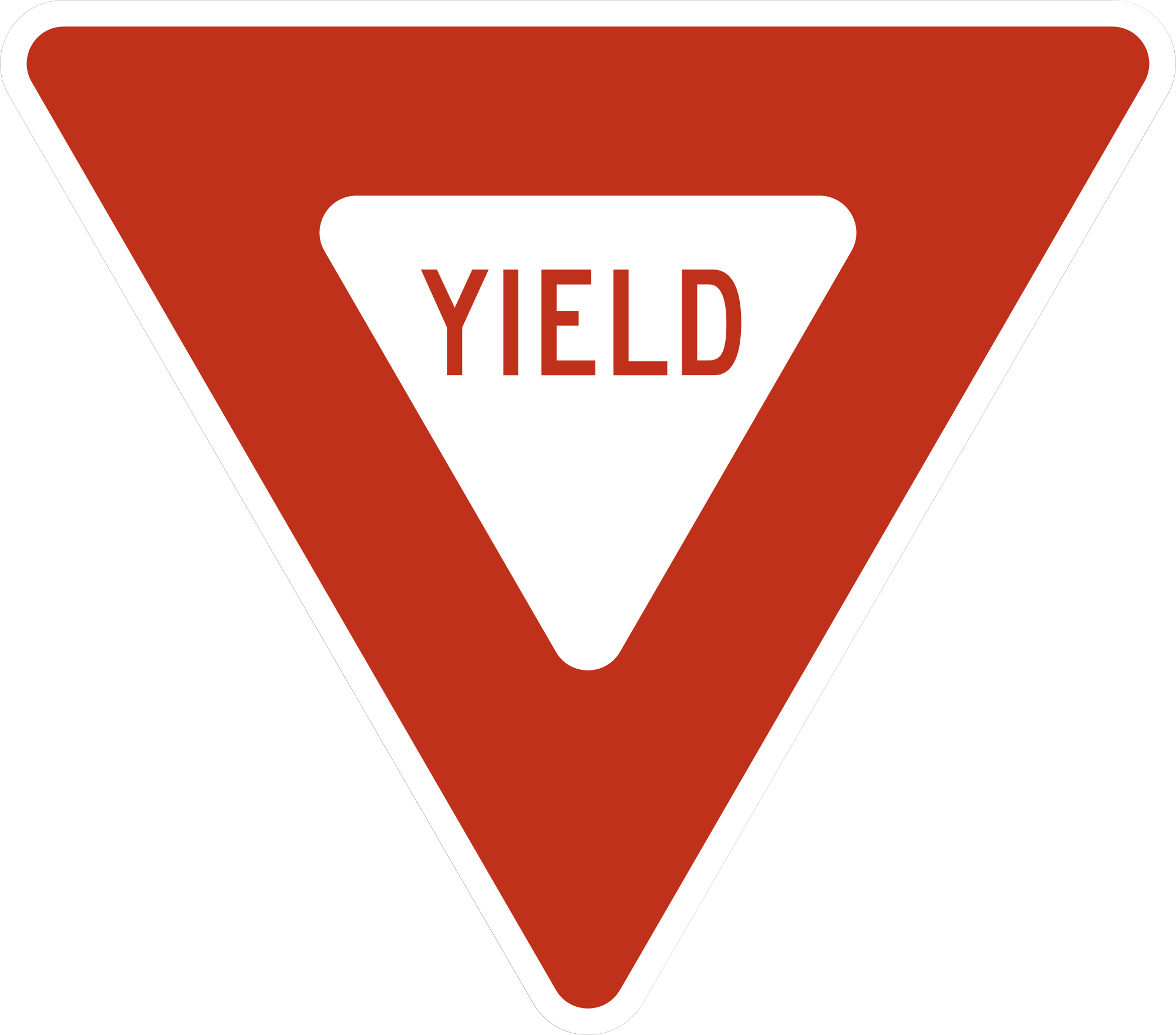
- Slow to a speed that is reasonable for the conditions
- Continue at the same speed because conflicting traffic must wait
- Make a full stop whenever the approach is controlled by a full-stop requirement
- Stop when necessary to avoid interfering with conflicting traffic
Study the sign shown. Which MUTCD application statement matches this device?
- It gives advance notice where the primary traffic signal lacks sufficient visibility
- It directs traffic toward a nearby public parking facility
- Toward traffic that might enter the roadway or ramp in the wrong direction
- It provides advance-distance guidance for a freeway rest area