Warning-device questions become manageable when you name two things separately: the road condition ahead and the placement job of the device. Similar yellow diamonds can point to different hazards, so read the symbol and the stated road layout together.
Use hazard plus placement
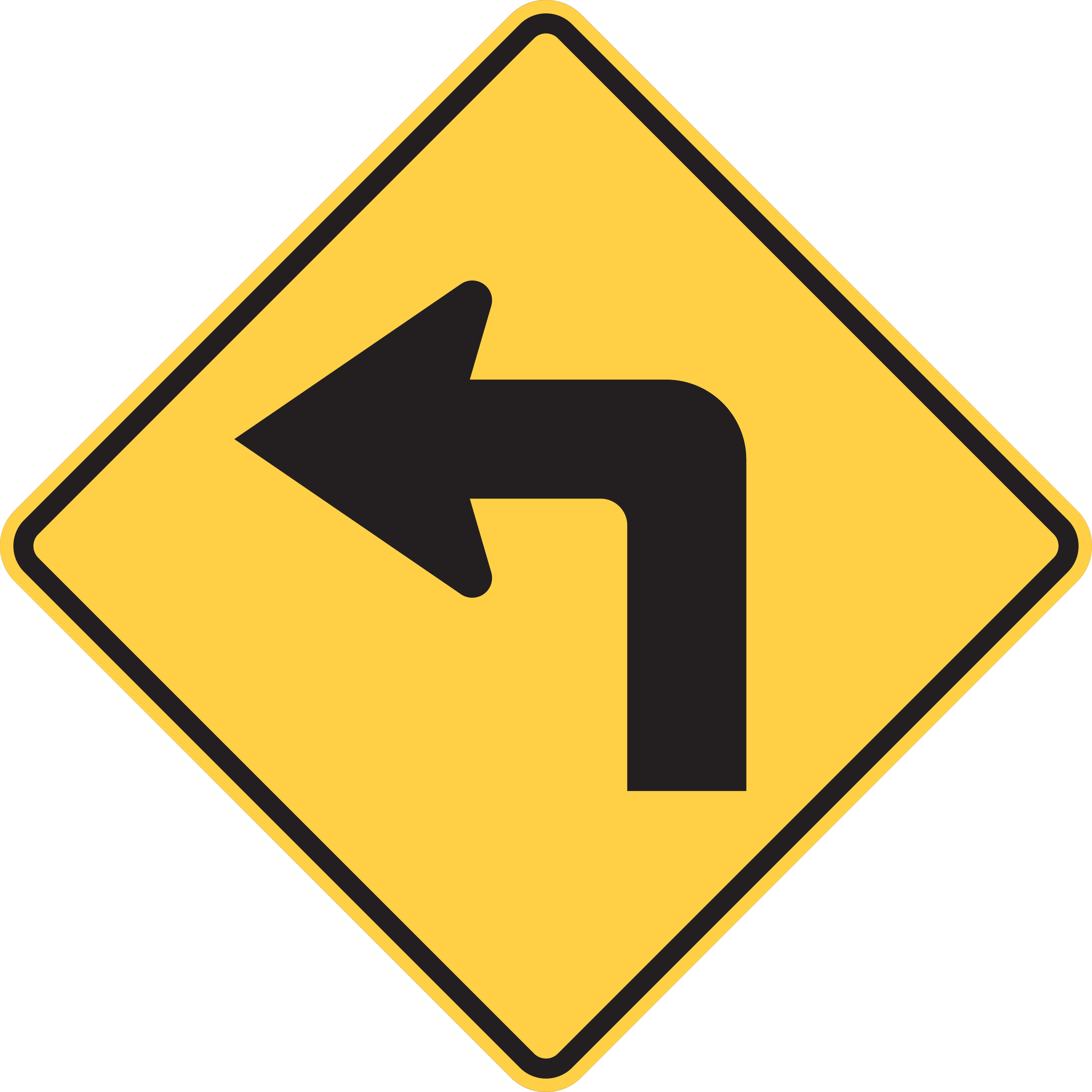
Begin with horizontal alignment. The sharp-turn family uses W1-1 when the advisory speed is 30 mph or less; a higher advisory speed ordinarily leads to the corresponding Curve device unless another provision governs. That number classifies the warning application. It is not the posted regulatory speed for the road.
| Reviewed visual cue | Bounded meaning or application |
|---|---|
| Black cross on a yellow diamond | An intersection ahead, with possible turning or entering traffic |
| Vertical red-yellow-green signal symbol | Advance notice when the primary signal view is too short for an adequate response |
| One lane line bends inward beside a short dashed line | The number of lanes drops in the direction being travelled |
| ROAD NARROWS legend | An abrupt two-lane width reduction where opposing vehicles cannot pass together without slowing |
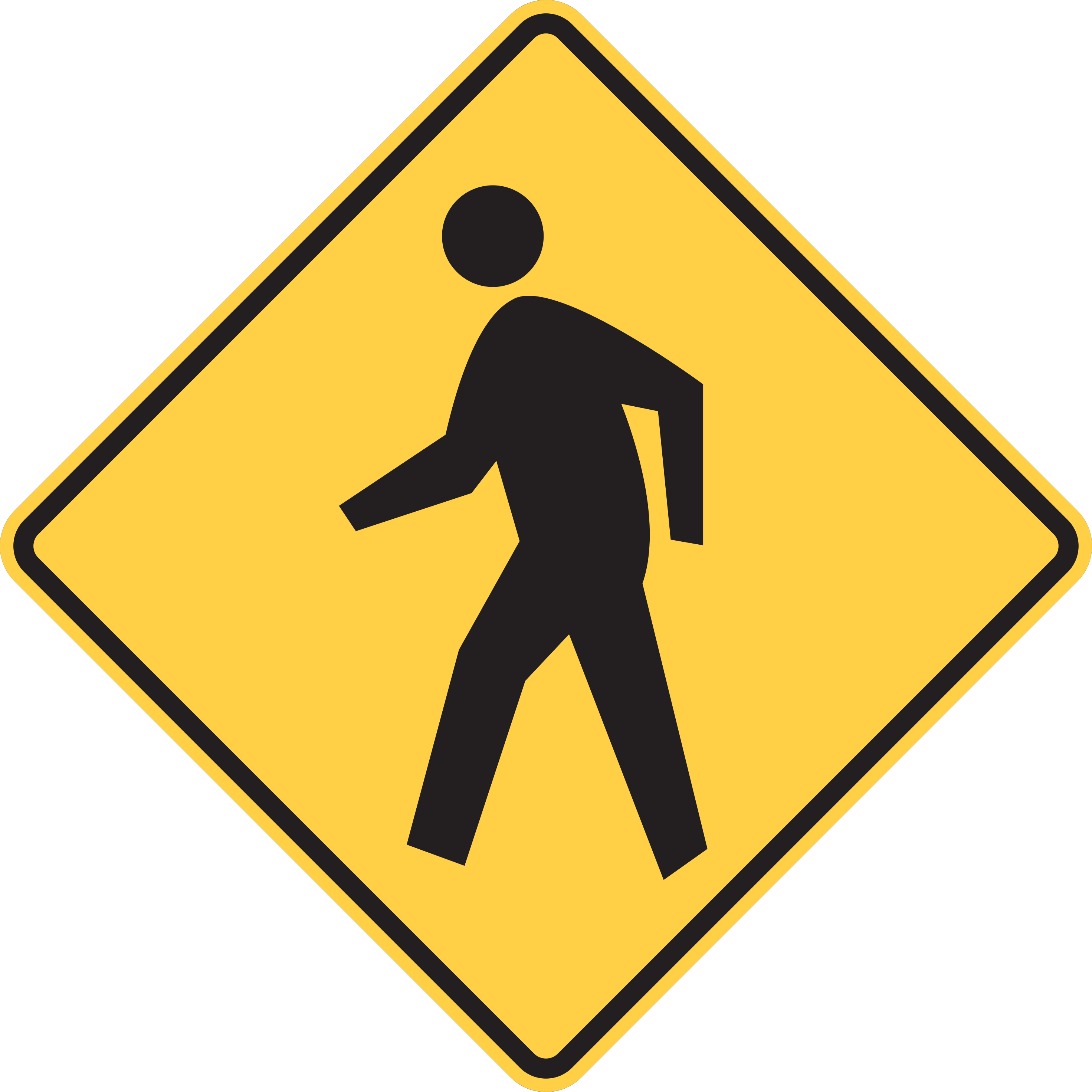
| Walking-person symbol | A pedestrian crossing, with the plaque or advance message determining placement |
Keep lane reduction separate from roadway narrowing. W4-2 is about the number of travel lanes becoming smaller in the direction of travel. W5-1 is about available pavement width on a two-lane road: opposing vehicles cannot use the narrowed section simultaneously without reducing speed. One condition can exist without the other, so a drawing that converges does not by itself settle which application is described.
Placement matters especially for a pedestrian-crossing warning. Advance placement adds AHEAD wording or distance information so drivers are prepared before reaching the crossing. At the crossing itself, the post-mounted walking-person device uses a W16-7P plaque whose diagonal arrow points down toward the location. A signal-ahead device has another placement test: it is installed when the primary signal lacks enough approach visibility for an adequate response. It warns about the signal; it neither substitutes for that signal nor creates a phase.
The traps
- Reading the cross-shaped symbol as a lane reduction. W2-1 announces an intersection and the possibility of traffic turning or entering.
- Treating the signal symbol as rest-area distance guidance. W3-3 warns before a traffic signal whose approach view is too short for an adequate response.
- Calling every inward edge a narrow-road condition. W4-2 describes a lane count dropping in the travel direction; W5-1 addresses a different two-way width problem.
- Reading ROAD NARROWS as a disappearing lane. W5-1 concerns an abrupt two-lane width reduction where opposing vehicles cannot pass together without slowing.
Try it
Study the sign shown. For this horizontal-alignment warning device, what is the MUTCD advisory-speed ceiling for recommending it instead of the corresponding Curve sign? Enter the number in mph.
Study the sign shown. Which MUTCD placement statements match this warning device? Select all that apply.
- It is installed when a primary traffic signal lacks sufficient approach visibility
- For a post-mounted sign at the crossing point, a diagonal downward-pointing arrow plaque identifies the location
- In advance of the crossing, an AHEAD or distance plaque can provide advance notice
- It is used before an abrupt two-lane narrowing that restricts simultaneous passage